


Table of Contents:
When you’re moving, there are a lot of important questions to answer. One question that can make or break your move is what size moving truck do you need to rent? A truck that’s too small could create a nightmare on moving day. One that’s too large is a waste of money. NSA Storage put together the following guide to help you make the right decision and ensure that your move goes off without a hitch.
Why It’s Imporant to Get the Right Size
Moving is stressful, both physically and mentally. There are dozens of things to do, and many small but essential tasks to remember. Moving day itself involves lifting, carrying, and loading heavy boxes and furniture, which is exhausting.
With all of this going on, the last thing you want is to run out of space on your moving truck. If you’re moving locally, running out of space means you’ll have to make several trips back and forth. Moving a long distance? It could create a nightmare scenario: unloading and reloading to make more space, renting a second truck, or leaving some things behind.
Renting a truck that’s big enough to hold everything will prevent these problems and make your move much less stressful. That’s why it’s vital to know what size truck you need ahead of time.
Moving Truck Sizes: An Overview
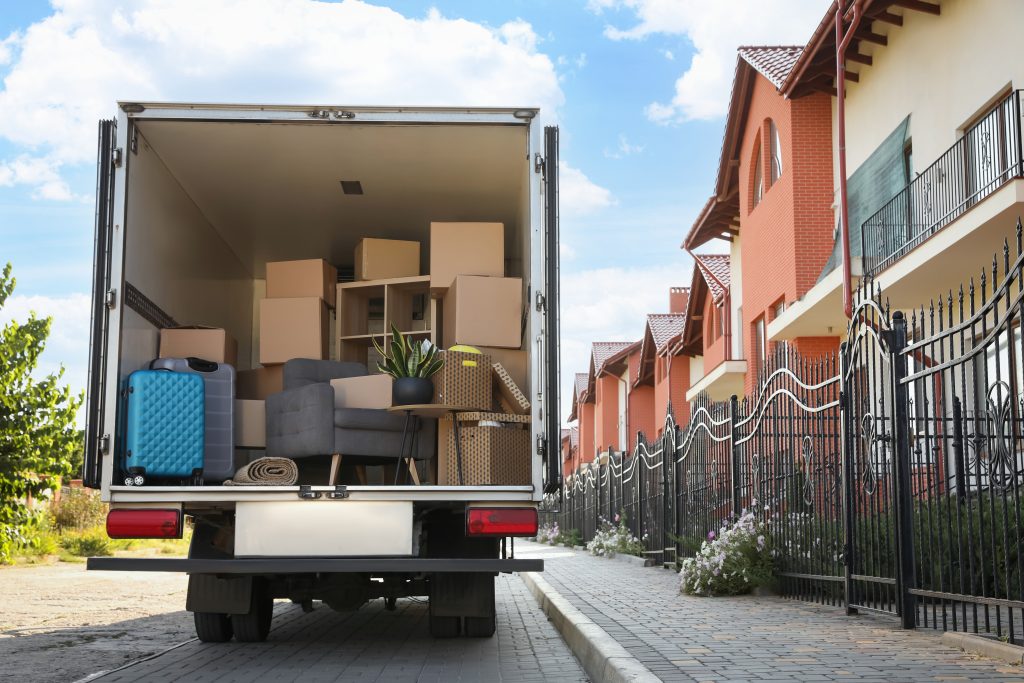
Truck rental companies typically describe their trucks by length because it’s the easiest for laypeople to understand. That’s why you’ll see them talking about 10-foot trucks, 20-foot trucks, etc. These numbers refer to the truck’s cargo box only, not the cab. Inside, most trucks have roughly the same height and width.
What’s most important is the amount of cubic feet of space the truck holds. This number takes into account the length, width, and height of the cargo box. Since height and width are similar on most trucks, the length becomes the biggest factor.
Below are the approximate cubic foot capacities of the moving truck sizes most rental companies offer:
- 10-Foot: 380–420 cubic feet
- 12-Foot: 450–500 cubic feet
- 15-Foot: 760–800 cubic feet
- 16-Foot: 800–900 cubic feet
- 20-Foot: 1,000–1,050 cubic feet
- 22-Foot: About 1,200 cubic feet
- 26-Foot: 1,600–1,700 cubic feet
How To Determine How Much Space You Need
Now that we know the importance of cubic feet, it’s time to figure out how many cubic feet of stuff you have. Then you can match that space to the truck you need, plus a little extra for good measure.
One rule of thumb moving companies use is that a single room equals 150–200 cubic feet of space. That includes rooms like the kitchen, living room, dining room, and bedrooms. Smaller rooms like bathrooms will use less space, while larger rooms might use more, depending on how many large pieces of furniture they contain.
If you want a better idea of what a cubic foot looks like, purchase a variety of moving boxes from your local retailer. A “book” box is typically 1.5 cubic feet, a “medium” box is 3 cubic feet, and a “large” box is 5 cubic feet.
Here’s a quick guide to help you determine the cubic feet of space you’ll need in your moving truck:
- A studio apartment: 300–400 cubic feet. 10 or 12-foot truck.
- A one-bedroom apartment: 600–700 cubic feet. 15-foot truck.
- A two-bedroom apartment: 800–1000 cubic feet. 16 or 20-foot truck.
- A two-bedroom home: 800–1,200 cubic feet. 20 or 22-foot truck
- A three-bedroom home: 1,200–1,600 cubic feet. 22 or 26-foot truck.
Anything larger than a three-bedroom home would likely require a 26-foot truck. Also, remember that it’s always good to rent a truck that’s slightly larger than you need. That way, you have a bit of a buffer if you have more stuff than you anticipated or if your packing skills are sub-par.
Common Household Items and How Much Space They Need
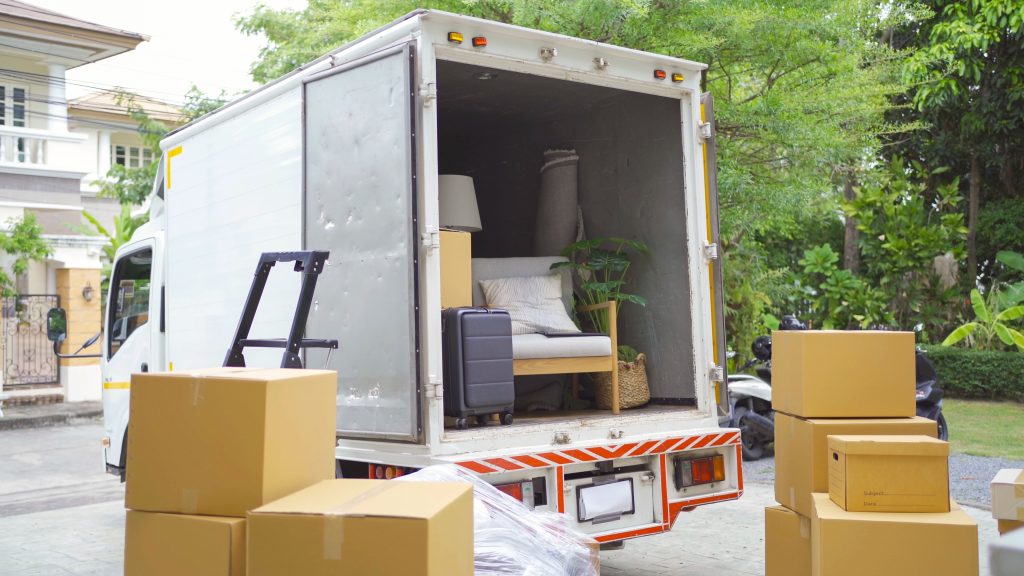
If you want to be as exact as possible, the list below will help. It provides the approximate cubic feet of space for many common household items. If you go room-to-room and add things up, it will give you a close estimate of the total amount of cubic feet you have.
Living Room
- Sofa – 70 cu ft
- Loveseat – 50 cu ft
- Recliner – 40 cu ft
- Bookshelf – 30 cu ft
- Coffee Table – 10 cu ft
- Flatscreen TV – 15 cu ft
- Coffee Table – 20 cu ft
Kitchen / Dining Room
- Dining Table – 50 cu ft
- Dining Chairs – 10 cu ft
- Hutch – 50 cu ft
- Refrigerator – 50 cu ft
- Washer / Dryer – 35 cu ft each
- Kitchen Table – 30 cu ft
- Kitchen Chairs – 5 cu ft
Bedroom
- Bed, King – 70 cu ft
- Bed, Queen – 60 cu ft
- Bed, Full – 50 cu ft
- Bed, Twin – 230 cu ft
- Dresser/Small – 30 cu ft
- Dresser/Large – 50 cu ft
- Night Stand – 10 cu ft
- Wardrobe – 50 cu ft
- Desk – 40 cu ft
Laundry / Garage / Miscellaneous
- Bicycle – 10 cu ft
- Night Stand – 10 cu ft
- Lawn Mower – 20 cu ft
- Wheelbarrow – 15 cu ft
- Freezer – 50 cu ft
Let NSA Storage Help With Your Move
The information above, if used correctly, should help you rent the right size truck that fits all your belongings. Remember, it’s always better to overestimate slightly than risk a truck that’s too small.
If you need to store your belongings during the move, NSA Storage can help. We offer storage facilities nationwide with safe, clean, and secure storage units in different sizes. You can reserve a storage unit online and use it when you arrive! You can even have your moving trucks deliver your extra items directly to your drive-up unit.